Blog

Featured

Recruiting Former Youth in Care for Research Study on Career Development Experiences

Researchers at the University of Calgary are conducting a study on the career experiences of young adults who aged-out of foster care, kinship care, or community-based care in Canada. The study is called ‘What Helps and Hinders in the Pursuit of Career Success?’.

To be eligible to participate in this study, you need to:
• Be between the ages of 18 to 29
• Have previously spent at least two years in foster care, kinship care, or community-based care in Canada
• Have aged-out of care in Canada
• Self-identify as doing well in your career development

If you are interested in participating then you will be asked to:
• Complete a short demographic questionnaire
• Participate in up to three interviews where you will be asked to share your career development experiences; Interviews will be conducted 1-on-1 virtually or in-person.

To express gratitude for contributing to this research you will be provided with a $15 e-gift card for participating in interview one, another $15 e-gift card for participating in interview two, and also a $10 e-gift card for participating in interview three.

If you have any questions or if you would like to participate in this study, please contact Ashlee Kitchenham at ashlee.kitchenham@ucalgary.ca

The University of Calgary Conjoint Faculties Research Ethics Board has approved this study [REB23-1099].

Featured

Recruitment for study on lived experiences of former children and youth in care is now open.

The International and Canadian Child Rights Partnership (ICCRP) aims to conduct a research study to explore intergenerational relationships, lived experiences of former children and youth who aged out of the Ontario child welfare system, and child welfare policy and practices.

The research question of the study is: “How Do Intergenerational Relationships among People with Lived Experiences in the Ontario Child Welfare System Influence Child Welfare Policies and Practices?”

To be eligible for the study, you need to be:

  • a resident of Canada.
  • have lived experiences in the Child Welfare System of Ontario; and
  • be 18 years old or older.

Participants are still eligible to participate in the research study if they are still receiving financial support from child protection agencies.

If you meet these requirements, the ICCRP invites you to participate in a semi-structured virtual interview that will be no more than 60 minutes long. Your participation will involve:

  • communicating with research assistants via email about your availability for the interview.
  • disclosing personal information to demonstrate your eligibility (e.g. your age, if you are a resident of Canada or not, lived experience in the Child Welfare system of Ontario); and
  • attending a one-hour virtual (audio)/phone interview with the research team and answering study questions.

If you are interested in volunteering in the study, ICCRP will send you another email at least two weeks before the interview date with information about the research study and a consent form. You will have time to let them know if you have any questions. If you agree to participate by signing and returning the consent form, ICCRP will forward the interview questions along with a list of mental health and emotional support resources.

Your participation is completely voluntary. No financial compensation will be provided but will have opportunities to engage in other ICCRP activities if you consent to being contacted in future. If you participate, your identity will not be shared with others outside of the research team. You have the right to withdraw voluntarily from participation or parts of participation at any time without providing any reasons.

The research is funded by the Social Sciences and Humanities Council of Canada (SSHRC) and has been reviewed and approved by the Toronto Metropolitan University Research Ethics Board Reference ID 2023-057. You can learn more about the research study by clicking this infographic, ICCRP Overview Infographic August 2023 (torontomu.ca).

If you are interested in more information about the study or would like to volunteer, please contact Jessie Lynn Cross at jessielynncross@torontomu.ca or you can choose to contact Tara Collins by email tara.collins@torontomu.ca or call 416-979-5000, ext. 554563.

Featured

Children’s Aid Foundation of Canada’s 2024-25 Scholarship Application is Now Open, Apply Today!

Children’s Aid Foundation of Canada post-secondary scholarships award young people $5000 for each academic year until they finish their program (to a maximum of 7 years from their program start) through a once yearly competitive application. The deadline to apply is Wednesday, January 24th, 2024.

If you are starting or continuing in full time studies in the 2024-25 academic year, and aren’t already receiving a Foundation Scholarship ($5000 a year)*, apply here for the Children’s Aid Foundation of Canada Scholarship today!

Visit our website for the link to the online application form, full eligibility information and answers to the most asked questions, or contact the Foundation’s PSE team at grants@cafdn.org .

Scholarship applications are open to youth with both financial need and the potential to succeed in their program of study. To be eligible, a student must be:

  • Be attending a post-secondary institution full-time or on a reduced schedule due to an academic accommodation, for a full school year starting in September 2024 or January 2025
  • Have been or will be in the temporary or permanent care of the Ministry or Department responsible for child protection services up until your age of majority birthday or had been in permanent care of the Ministry or Department responsible for child protection services for at least 12 months
  • Are under the age of 30
  • Are over the age of 30 and have not received a CAFC Scholarship or Bursary before

If you have any questions about the application form, process, or eligibility, we can help!  

Email grants@cafdn.org with your questions and visit our website for more information and the application link.

3 University of Toronto Scholarships for Former Youth in Care

For questions, get in touch with the SMC Registrar smc.registrar@utoronto.ca

  1. The Korman Catholic Children’s Aid Bursary

Awarded to a full-time student registered at St. Michael’s College, in good academic standing. 

The applicant(s) must demonstrate financial need; are Canadian citizens, permanent residents of Canada or protected persons under subsection 95(2) of the Immigration and Refugee Protection Act (Canada) at the time of the application; and are residents of Ontario at the time of the application.

The preferred criteria include any of the following:

1) CCAS crown wards registered at St. Mike’s

2) CCAS former crown wards registered at St. Mike’s

3) CCAS crown wards admitted to U of T

4) Crown wards or former crown wards from CAS or other similar entities admitted to U of T

5) St. Mike’s students who demonstrate financial need

Value:  $2,000 – $3,000

https://stmikes.utoronto.ca/community/awards-and-scholarships#smc-admissions-awards

  1. The Matthew O’Brien Memorial Scholarship

Awarded to a full-time student registered at St. Michael’s College, in good academic standing. 

The applicant(s) must demonstrate financial need; are Canadian citizens, permanent residents of Canada or protected persons under subsection 95(2) of the Immigration and Refugee Protection Act (Canada) at the time of the application; and are residents of Ontario at the time of the application.

The preferred criteria include any of the following:

1) CCAS crown wards registered at St. Mike’s

2) CCAS former crown wards registered at St. Mike’s

3) Crown wards or former crown wards from CAS registered at St. Mike’s

4) St. Mike’s students who demonstrate financial need

Value:  $5,000 – $10,000

Students interested can contact our Registrar for more info on how to apply. Once enrolled at the University of St. Michael’s College may apply for all grants using the Undergraduate Grant Application available on ACORN

  1. The Odette Family Bursary

Awarded to a full-time student registered at St. Michael’s College, in good academic standing. 

The applicant(s) must demonstrate financial need; are Canadian citizens, permanent residents of Canada or protected persons under subsection 95(2) of the Immigration and Refugee Protection Act (Canada) at the time of the application; and are residents of Ontario at the time of the application.

The preferred criteria include any of the following:

1) CCAS crown wards registered at St. Mike’s

2) CCAS former crown wards registered at St. Mike’s

3) CCAS crown wards admitted to U of T

4) Crown wards or former crown wards from CAS or other similar entities admitted to U of T

5) St. Mike’s students who demonstrate financial need

Value:  $2,000 – $10,000 

Students interested can contact our Registrar for more info on how to apply. Students once enrolled at the University of St. Michael’s College may apply for all grants using the Undergraduate Grant Application available on ACORN.
Never Too Late (NTL) is hiring a Lived Expert Community Development Specialist

The Lived Expert Community Development Specialists are an essential part of Never Too Late (NTL). Their primary responsibilities include providing intentional input into the deliverable goals and strategic priorities of Never Too Late (NTL), specifically relating to the success of the Ontario Trillium Foundation grant received by Never Too Late (NTL). This includes helping ensure the Lived Expert lens and voice is centred in the development of programming and resources, as well as the delivery of education events.

Lived Expert Community Development Specialists may have a long-standing relationship with Never Too Late (NTL), or may have connected more recently, with each voice having equal importance.

The Lived Expert Community Development Specialists will be supported by the Lived Expert Community Coordinator and Leadership and Clinical Lead. This is a part-time, temporary grant-based position. There are four (4) positions available.

Details:

  • Temporary / Part-Time
  • Start Date: April 27, 2026
  • End Date: December 18, 2026
  • Average of 4.5 hours weekly/33.5 weeks (up to 162 hours total)
  • Rate: $40/hour
  • Appliction Deadline: 11:59 pm on Monday March 9th, 2026

Personal lived experience of child welfare and/or disruption from original family, and a deep understanding of the lifelong impact those experiences have is required. 

Apply here

Or download job posting PDF

Spring Grant Open for Applications!

Cannonbury Foundation’s Spring Grant is now accepting applications.

The Spring Grant funding program supports the next generation of Canadians by investing in youth, aged 18-29, located in Ontario, ready to take the next step to accomplish their goals in education, employment or arts.

Apply by February 6, 2026 at 5:00 PM (EST): Spring Grant

Successful applicants will receive up to $3,000 to put towards achieving their goals.

Do you qualify?

  • Between the ages 18-29
  • Live in Ontario
  • Finances are a barrier (earning less than $60,000/year if living independently or less than $40,000/year if living with support
  • Have an existing bank account or can open a bank account at a Canadian financial institution
  • Can contribute a small percentage of funds toward the total amount requested

Visit: Spring Grant to access the application, view a list of frequently asked questions and learn more details about this grant.

Participate in Park Street Education’s Youth Advisory Group

Park Street Education is putting together a Youth Advisory Group (YAG) to help shape a new program for youth in care, and they’re looking for your perspective and experience.

This is a paid, fully virtual, low-pressure role. You won’t be asked to share anything you’re not comfortable in sharing – the goal is to gather honest ideas about what makes learning feel safe, supportive, and meaningful from your perspective. All the details are attached.

Interested? Complete this form:  Youth Advisory Group – Expression of Interest – Fill out form by January 30th, 2026.Questions? Contact Karen at Park Street Education, here, karen.stern@parkstreetedu.com.

Invitation to take part in research study for youth with lived experiences in child welfare in Ontario

Purpose of the Study

The study aims to explore intergenerational relationships, lived experiences of former children and youth who aged out of the Ontario child welfare system, and child welfare policy and practices. This study is part of the current research of the International and Canadian Child Rights Partnership (ICCRP).

Research Question

“How Do Intergenerational Relationships among People with Lived Experiences in
the Ontario Child Welfare System Influence Child Welfare Policies and Practices?”

Criteria to Participate

Dr. Tara Collins (Principal Investigator) and Jessie-Lynn Cross, Research Assistance at Toronto Metropolitan University are seeking 50 participants for this study. To participate, you need to be:

  • a resident of Canada;
  • are 18+ years old at the time of study participation; and
  • have lived experience in the Ontario child protection system for any length of time and currently living with or without financial support from child protection agencies.

Details of the Study

If you agree to volunteer in this study, you will be sent an email with brief information about the research topic, goal, and consent forms. You will have time to ask questions about the study and if you agree to participate by signing and returning the consent form, you will be forwarded the interview questions along with a list of mental health and emotional resources.

If you meet the requirements and wish to participate, you will be invited to a semi-structured virtual interview that will be no more than 60 minutes long. Your participation will involve:

  • communicating with Jessie-Lynn Cross and other research assistants via email about your availability for an interview;
  • disclosing personal information to demonstrate your eligibility (e.g. your age, if you are a resident of Canada or not, lived experience in the Child Welfare system of Ontario); and
  • attend a one-hour virtual (audio)/phone interview and answer the study questions.

Your participation is completely voluntary. No financial compensation will be provided, but you will be provided an opportunity to engage in other ICCRP activities if you consent to future contact. Please know that there is no requirement to participate in this study. You may know our lead co-investigator or other research team members due to their extensive experiences in the child welfare system in Ontario.

If you choose not to participate, it will not impact your relationship with either of the primary investigators, Jane Kovarikova or Tara Collins; Jessie-Lyn Cross or other research assistants, your relationship with the Child Welfare Political Action Committee, or Toronto Metropolitan University. This means that your participation would have no impact on the decisions or services provided by these organizations/networks in Ontario. If you participate, your identity will not be shared with others outside of the research team. You have the right to withdraw voluntarily from participation or parts of participation at any time without providing any reasons.

The research is funded by the Social Sciences and Humanities Council of Canada (SSHRC) and has been reviewed and approved by the Toronto Metropolitan University Research Ethics Board Reference ID 2023-057.

If you are interested in more information about the study or would like to volunteer, please contact Jessie-Lynn Cross by email at: Jessielynncross@torontomu.ca or you can choose to contact Tara Collins by email at: tara.collins@torontomu.ca or call 416-979-5000, ext. 554563.

GTSWCA Scholarships – Now Accepting Applications

The Greater Toronto Sewer and Watermain Contractors’ Association (GTSWCA) 2025 scholarship program is now accepting applications.

The goal of this program is to help students meet the demand of rising education costs. In 2025, the GTSWCA will provide up to 20 scholarships in the amount of $2,500.

Eligibility: applicants must be enrolled in a university, college, trade school, or training program in September 2025

Deadline: fill out the application form and submit all the required materials by no later than Friday, September 5, 2025 at 11:59 pm

If you have any questions, please contact the GTSWCA (905-629-7766 or info@gtswca.org).

Click Here for Scholarship Application

Resources and Strategies for Indigenous Youth

by Sebastian Hable

Indigenous youth in foster care face unique challenges but also have incredible opportunities to build skills and connections that empower them to thrive. Whether you’re focusing on education, life skills, or mental health, there are resources and strategies to help you navigate this journey.

1. Education: Your Path, Your Future

Education can open doors to a brighter future. If you’re in foster care, you might be eligible for bursaries or grants designed for Indigenous youth. Look into programs like the Indigenous Skills and Employment Training (ISET) program or scholarships specific to Indigenous students. Remember, it’s okay to take your time to figure out what you want to pursue—there’s no one “right” path.

2. Building Life Skills

From managing your money to preparing for independent living, life skills are essential. Start small by learning how to budget your expenses or cook simple meals. Many community organizations offer workshops tailored for youth in care, where you can practice these skills in a supportive environment.

3. Mental Health: Prioritize Yourself

It’s normal to feel overwhelmed, but you don’t have to face it alone. There are culturally relevant mental health supports available, such as counseling services rooted in Indigenous traditions. Talking to a trusted Elder or support worker can also help you find balance and connection to your identity.

4. Peer Connections: You’re Not Alone

Finding others who understand your experience can be empowering. Consider joining a youth group or online community for Indigenous foster youth. These spaces offer a chance to share your story, learn from others, and build lasting friendships.

5. Your Resilience is Your Strength

As an Indigenous youth, you carry a legacy of resilience. Despite the systemic barriers you may face, there are resources, people, and organizations ready to support you. Lean into your strengths, ask for help when you need it, and remember—you have the power to shape your future. You’re not on this journey alone. Whether you’re looking to continue your education, find housing, or build stronger connections, there are people and programs out there to guide you every step of the way.

Finding a Mentor in the Community: Why It’s Important and How to Make It Happen. 

by Yasmine V.

Having a mentor can be a game-changer, especially for youth in and from care. Mentors provide guidance, support, and a listening ear, which can make a huge difference in navigating life’s challenges. A mentor is often someone with more experience who can share their knowledge, offer practical advice, and, most importantly, be a trusted adult to look up to. For youth in care, finding that trusted connection can open doors to new opportunities and provide a stable support system that encourages growth and self-confidence. 

Why a Mentor Matters: A mentor is more than just someone who gives advice; they’re a guide, a supporter, and a cheerleader. Mentorship has been shown to positively impact mental health, academic achievement, and career prospects. Having someone who believes in you can boost your self-esteem and help you stay motivated, even when times are tough. Mentors can offer insights based on their own experiences, helping you make decisions that align with your goals and values. For youth in care, who might not have a consistent adult figure in their lives, this support can be invaluable. 

How to Find a Mentor Finding: The right mentor can feel overwhelming, but there are ways to make the process manageable. Start by identifying what you’re looking for in a mentor. Do you want someone who can help with career advice, school challenges, or maybe just someone to talk to about life? Once you know what you’re looking for, consider reaching out to local organizations that offer mentorship programs, such as Big Brothers Big Sisters, or local youth groups. Another good approach is to get involved in community activities, such as volunteering or joining clubs that align with your interests. When you’re involved in activities you’re passionate about, you’re more likely to meet people who share your values and can offer guidance. Don’t be afraid to ask for help or express your interest in finding a mentor. Most people are flattered by the opportunity to share their experiences and are happy to support young people who are eager to learn. 

Benefits of Having a Trusted Adult in Your Life: For youth in and from care, having a trusted adult can create a sense of stability and belonging. This person can offer advice, help with setting goals, and provide encouragement through difficult times. They can also serve as a role model, showing you what’s possible when you work hard and stay dedicated. A mentor can help you build confidence by reminding you of your strengths and achievements and encouraging you to step outside of your comfort zone. How Mentors Guide and Empower A mentor’s role isn’t to give you all the answers but to help you find your path. They can guide you by sharing tools, strategies, and resources that have worked for them or others. For example, they might help you learn how to set achievable goals, manage your time, or prepare for a job interview. They’re also there to listen when you’re facing challenges, offering a fresh perspective and helping you work through obstacles. 

Having a mentor can make a big difference in feeling connected, confident, and prepared to face the future. If you’re a youth in or from care, finding a mentor could be one of the most valuable steps you take toward building the life you want.

Vote for Ontario Elections on February 27th!

Vote for the provincial elections in Ontario on election day on February 27 or at any advance voting location on February 21 or 22. Your vote matters and you can influence policies at the provincial level because the provincial government is responsible for the following:

  • Education
  • Colleges and universities
  • Drivers’ licensing and highways
  • Hospitals and healthcare delivery
  • Municipalities
  • Natural resources
  • Property and civil rights
  • Provincial law and courts
  • Provincial taxes
  • Social services

Find your riding: You can find your provincial electoral district by entering your postal code on the search tool on the following page, Electoral Districts.

ID Requirements: ID is required to vote in a provincial election. Photo ID is not required when you go to vote. If you choose to provide photo ID, your appearance does not need to match the photo. You do not need to provide any information about your sex or gender expression when you go to vote.

ID can be shown on a mobile device. International ID or permanent resident cards are not accepted.

If you are on the Register, you will receive a voter information cardOpens in popup modal glossary definition (VIC) in the mail about when and where to vote. Bring your VIC and one piece of ID showing your name to receive a ballotOpens in popup modal glossary definition when you go to vote.

You can still vote if you do not receive a VIC, but your name may not be on the Register. You must bring one piece of ID showing both your name and home address to register and receive a ballot.

Only eligible voters can vote in provincial elections. To be eligible to vote, you must be:

  • 18 years of age or older;
  • a Canadian citizen; and
  • a resident of Ontario.

Use Voter RegistrationOpens in a new tab to confirm, update, add or remove your voter information. Alternatively, you can complete paper application formsOpens in a new tab.

ID includes most documents issued by the Government of Canada, the Government of Ontario or a municipality in Ontario. Find examples of accepted ID below.

If you have a voter information card, bring one piece of ID with your name on it.

Government-issued

  • Birth certificate
  • Marriage certificate
  • Ontario health card
  • Canadian Armed Forces ID card (NDI 20)
  • Canadian passport
  • Certificate of Canadian Citizenship
  • Certificate of Indian Status (Status card)
  • Certificate of Naturalization (issued before January 1, 1947)
  • Citizenship card
  • Firearms licence
  • Nexus/FAST (Free and Secure Trade) card
  • Old Age Security identification card
  • Social Insurance Number confirmation letter
  • Registration of birth abroad (issued between January 1, 1947 and February 14, 1977)
  • Veteran Affairs Canada Health Care Identification card
  • Veteran’s Service Card (NDI 75)
  • Birth Certificate from a Canadian province or territory

Other

  • Blood donor card
  • Credit/debit card
  • Diplomatic or special passport
  • Employee card
  • Hospital records (including hospital bracelets)
  • Union card or professional licence
  • Student card
  • A document from a Band Council in Ontario established under the Indian Act (Canada) showing a person’s name
  • Any document showing your name issued by:
    • the Government of Canada
    • the Government of Ontario
    • a municipality
    • a government agency

If you don’t have a voter information card, bring one piece of ID with both your name and home address. These include the following:

Government-issued

  • Ontario driver’s licence
  • Ontario motor vehicle permit (plate or vehicle portion)
  • Ontario photo card
  • Property assessment notice from Municipal Property Assessment Corporation
  • Child tax benefit statement
  • Income tax notice of assessment
  • Social Insurance Number confirmation letter
  • Statement of Employment Insurance Benefits Paid T4E
  • Statement of Old Age Security T4A (OAS)
  • Any document showing both your name and home address issued by the Government of Canada/Ontario

Educational or financial

  • School admission letter
  • School transcript or report card
  • Tuition/fees statement
  • Bank account or credit card statement
  • Cancelled personalized cheque
  • Cheque stub, pay receipt or T4 issued by a person’s employer
  • Insurance statement
  • Residential mortgage, lease, or rental statement
  • Signed loan or financial agreement with a financial institution
  • Document showing campus residence issued by the office or officials responsible for student residence at a post-secondary institution 

Other

  • CNIB card or card from another registered charitable organization that provides services to persons with disabilities
  • Hospital records showing a person’s name and home address
  • Letter of Confirmation of Residence
  • Utility bill (hydro, water, gas, telephone, cable TV, public utilities commission)
  • Property tax assessment or bill from a municipality in Ontario
  • Any other document showing both your name and home address issued by:
    • a municipality
    • a government agency
    • or certified by a court in Ontario
    • a Band Council in Ontario established under the Indian Act (Canada)

You can find voting locations by entering your postal code on the search tool on the following webpage, Search – Elections Ontario.

Find out more information in relation to voting by checking the FAQ’s and other resources on the Elections Ontario website here, Frequently asked questions.

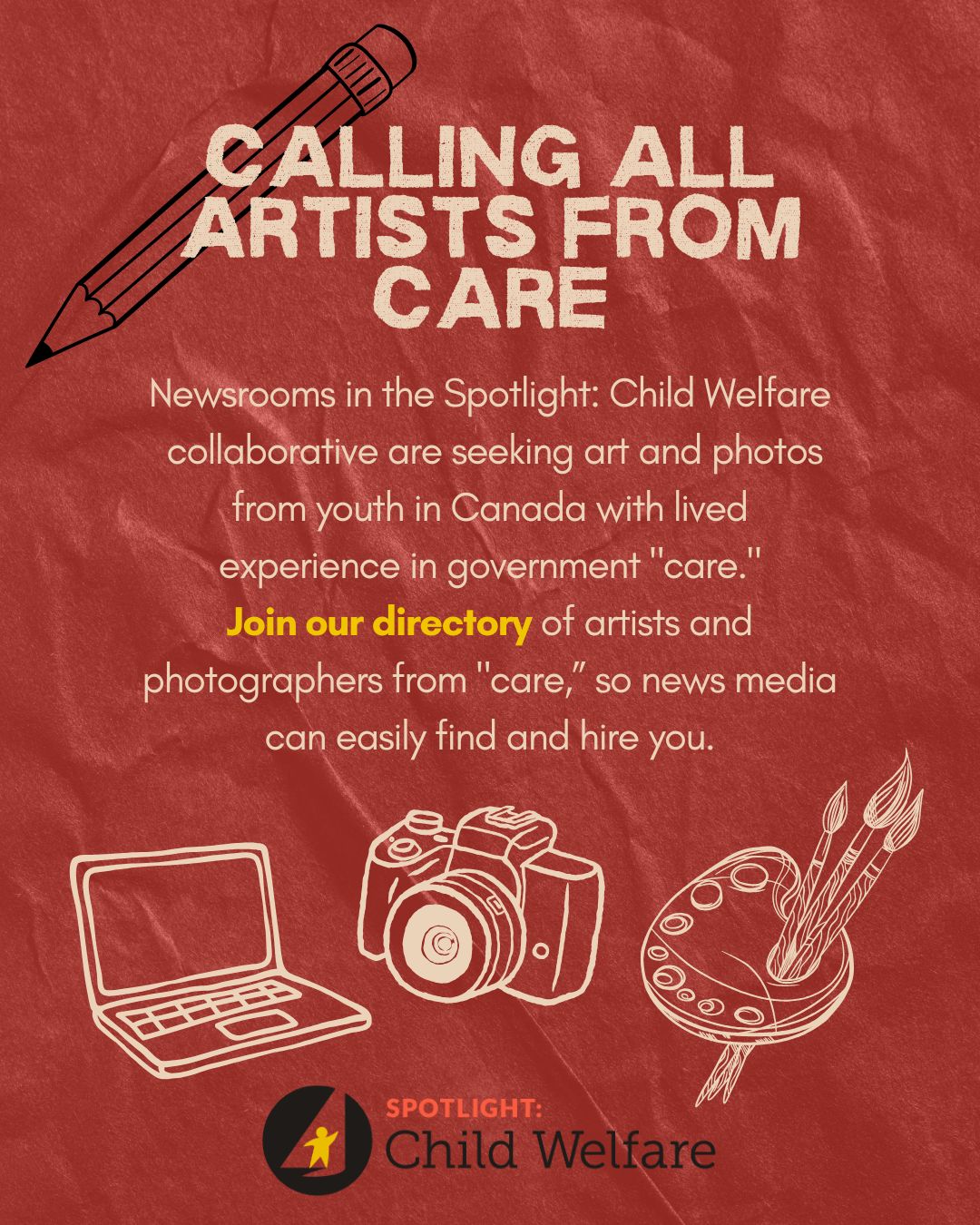
Calling all Artists from Care!

Media partners in the Spotlight: Child Welfare (SCW) collaborative journalism project are interested in commissioning art/photos from youth with lived experience in “care.”

To support these connections, SCW is creating a directory of artists from “care.” Anyone who has lived through government “care” (e.g. foster care, youth agreements, etc.) can join the directory. For more information on the directory or to join, see the SCW’s Artists from Care Directory Form, located here.

Also, in case you missed it, Children’s Aid Foundation of Canada (CAFC) recently launched a Youth and Lived-Expert Business Directory. If you are a young person with lived experience of the child welfare system and running your own business, you can also promote this on our directory! To submit your business for inclusion, see CAFC’s Youth and Lived Expert-Led Business Directory Form, located here.